

Opinions are my own and do not represent past, present, and/or future employers. All content is based on public information and independent research. This newsletter is not financial advice, and readers should always do their own research before investing in any security. I am invested in the semiconductor industry. As of the date of this publication, I may hold long or short positions in the securities discussed in this article.

If the world of semis was real life, GTC is the equivalent of the Superbowl and Nvidia earnings are the equivalent of Election Night.
The election that determines if it’s the hypemaxxing bulls or the bubblemaxxing bears who will get voted in as President of the Narrative for the next three months.
Outline
Valuation
Supply/Demand Good News
TSMC Capex Raise & CoWoS Allocation
Hyperscaler Blowout Capex
Meta + Nvidia Deal
Technical Good News
Google Ghosted the MLPerf
SemiAnalysis InferenceX: NVL72 Absolute Framemogging
The Networking Holy Grail: Die-to-Die Clock Forwarding Over Optics Enables Datacenter-Sized GPUs
Earnings Estimates
Valuation
Jensen is absolutely fucking killing it.
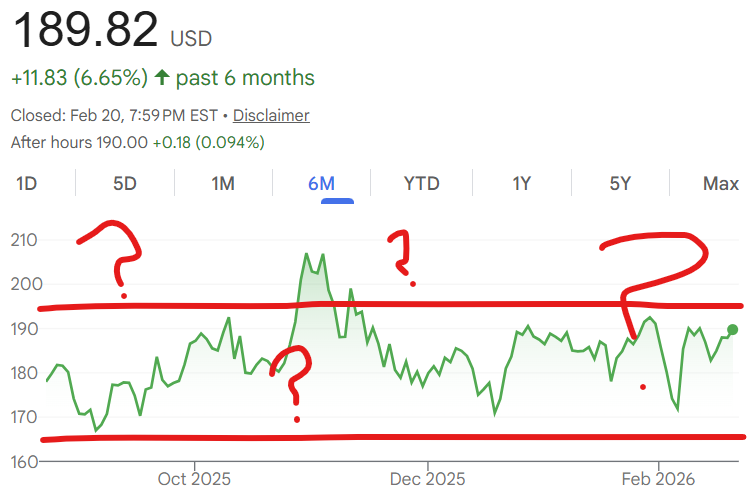
Yet the stock has inexplicitly traded flat for the past 6 months. Truly inexplicably. There was a mountain of good news, yet the stock be choppin’, but we all know this. It’s like an “emperor has no clothes” situation.
So how cheap is it? I have a very generic buyside model.
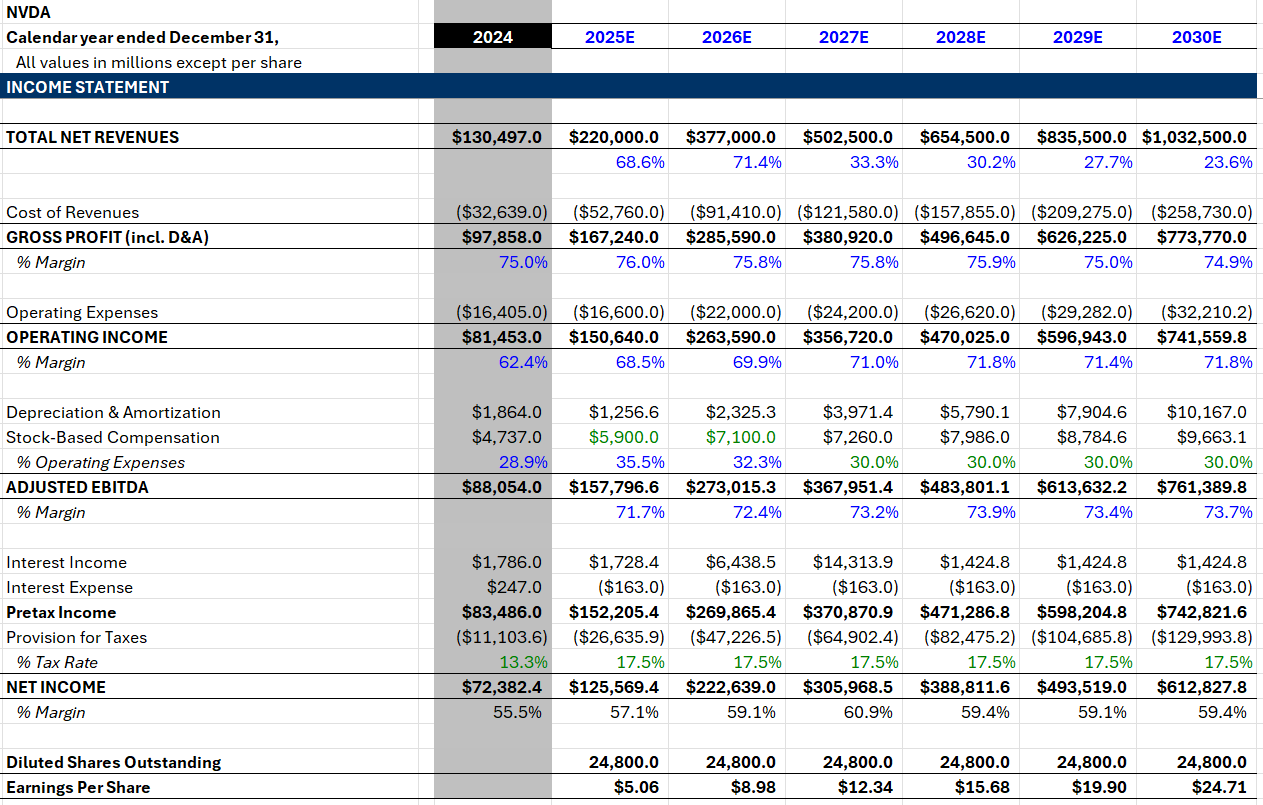
The sell-side is already past my estimates, and I have seen CY26 revenue estimates as high as $400b and CY27 estimates as high as $560b. I haven’t updated this since the last earnings so none of the capex madness is baked in. Even with this model, Nvidia trades at less than 20x current year earnings and 15x 2027 earnings.
What the fuck, Mr. Market?
People say “we are pricing in failure” all the time that it no longer means anything, but in this case it’s actually true. 15x on Nvidia, on conservative 2027E earnings is peak cyclical multiples. If we go into an “AI downcycle” and earnings compress 50%, we would be 30x on trough earnings, which is generally pretty standard for cyclical companies. So that means we are literally treating Nvidia like AI is cyclical and the AI cycle ends in 2 years.
This is also why I have no respect for Nvidia short-sellers. I am willing to have a conversation with bears on memory, optics, and all the other sky high “bottleneck stocks.” I am long many of them myself and I understand the risks. But what exactly are you betting on by shorting Nvidia? That hyperscalers chicken and cut capex by 50%? It’s already priced in.
If you’re short I hope you get squeezed like a lemon 🙂
Supply/Demand Good News
You can deterministically and deductively determine that Nvidia’s estimates are too low by using some 7th grade level supply chain logic.
TSMC Capex Raise & CoWoS Allocation
CoWoS allocation is the semiconductor analyst’s gold standard for determining who gets chips from TSMC.
There are two things going on that are good for Nvidia. First, TSMC is expanding fab capacity, including the all-important CoWoS, very fast.
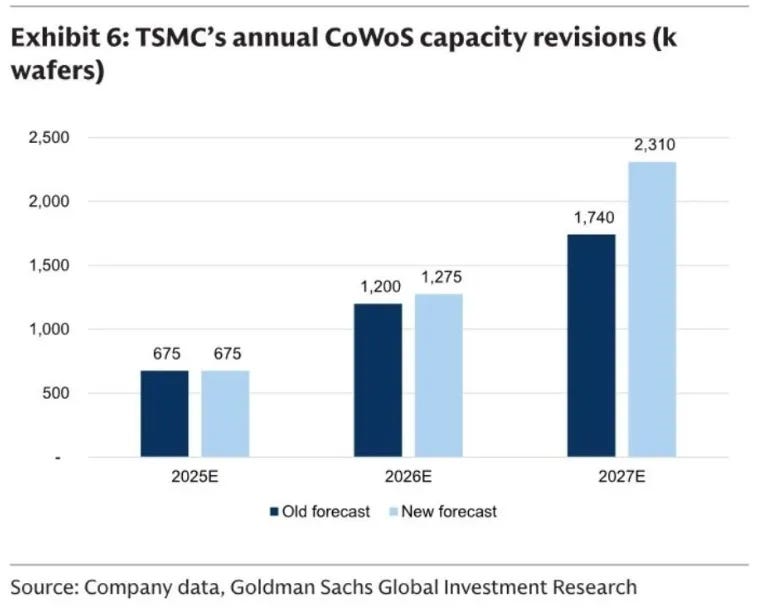
Forgive me if I oversimplify all of this but I really believe sometimes we need to zoom out to see the obvious. How am I so certain of this?
TSMC on their last earnings: Capex $54b, est 46b, next 3-years’ capex to be “significantly higher” than past 3-years total of US$101 billion.
Semicaps have generally rallied 30% YTD
So if the factory is saying they are buying more tools, and the makers of the tools are becoming more valuable, what does that say for the total capacity of said factory?
Second, Nvidia is the best at booking out this capacity. They have already secured 60% of the capacity for 2027. Broadcom, Google, AMD, and the rest have to fight for the scraps. This is well known. Jensen goes to Taiwan frequently to court his supply chain buddies.
This means the supply side of the equation has improved significantly in the last 6 months. This should mean estimates rise, and rising estimates should mean the stock rises. But it doesn’t which means Nvidia has gotten significantly cheaper.
Hyperscaler Blowout Capex
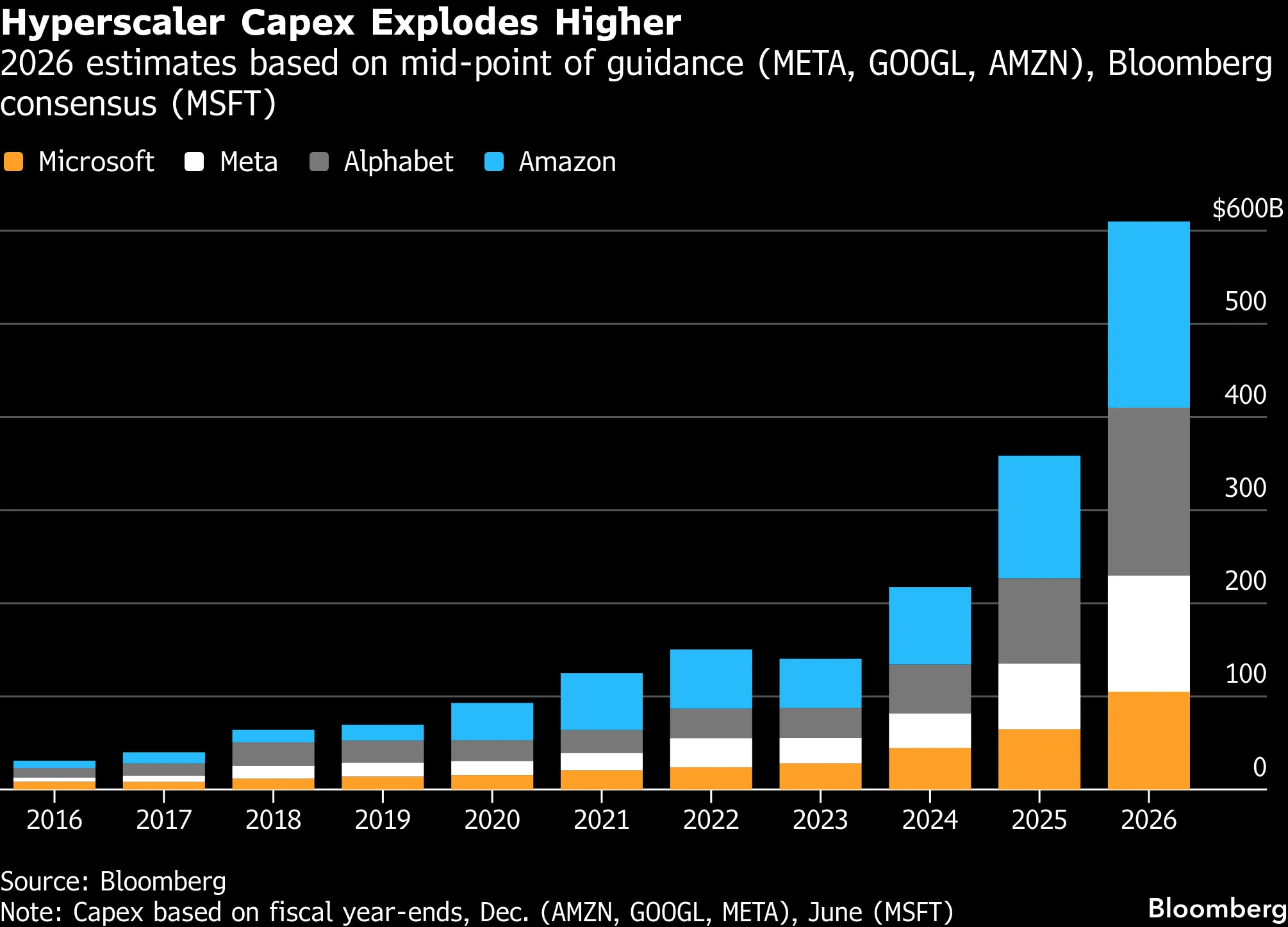
Hyperscaler capex isn’t just increasing linearly.
It isn’t even increasing exponentially.
It’s increasing at an increasing percentage rate every year.
This isn’t an argument obviously. I know we’re not gonna be at a quintillion dollars of capex in 5 years. But it’s just funny to point out.
There was so much fear around Google and Amazon both spending $50-100b more than consensus expected but that bear take is lathed in logical fallacies. The bubblemaxis say the hyperscalers are illogical. However,
Compute is so constrained 7-year-old A100 chips are increasing in rental prices and you aren’t gonna increase capacity?
Who knows Amazon’s internal ROIC better, someone in finance or AWS execs?
Most of this capex is going to Nvidia. Even Google. Because they run a cloud, people will always demand the kind of chips they want so you have to offer every kind of chip. And people want Nvidia.
This should mean estimates rise, and rising estimates should mean the stock rises. But it doesn’t which means Nvidia has gotten significantly cheaper.
Meta + Nvidia Deal
But they were gonna buy Nvidia chips anyway right? Why announce a deal?
Well, the sheer scale here is insane.
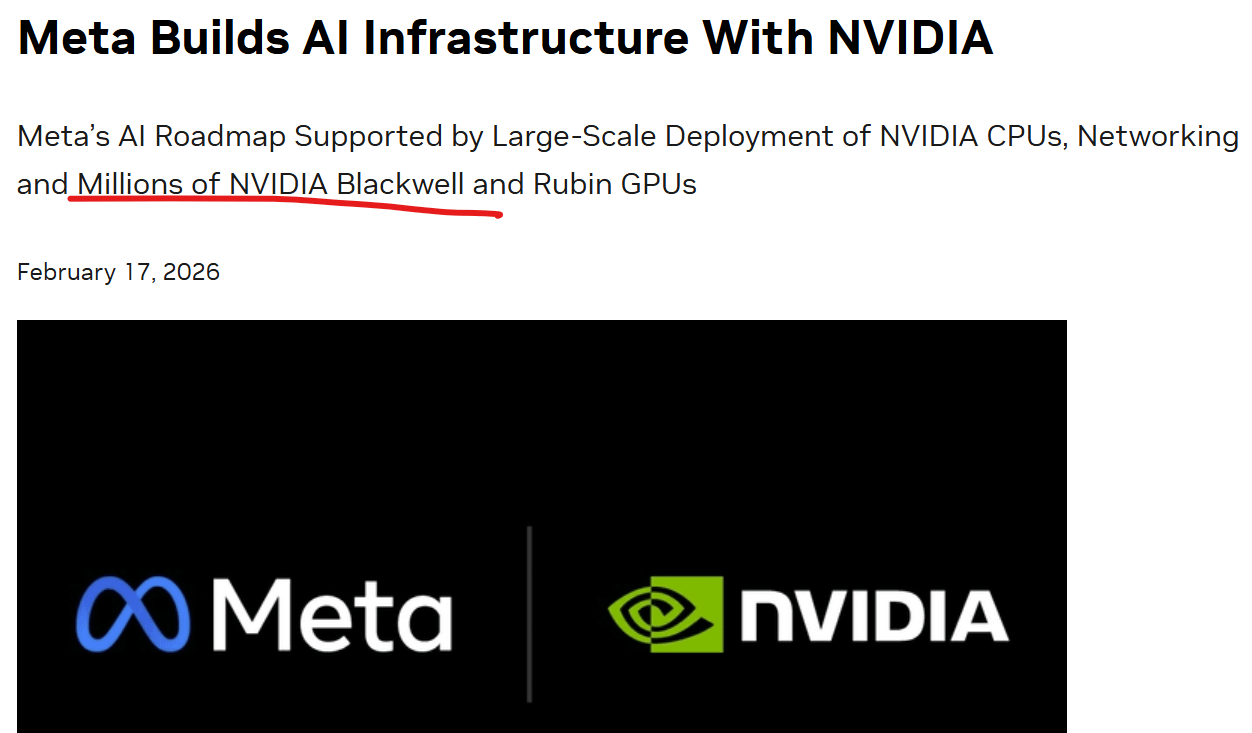
With a fixed capex pie, more Nvidia means less everyone else. You saw the market recognize this when AMD sold off over 4% after hours on this news.
What was especially new here was the sheer amount of Grace and Vera CPUs they will deploy, with some CPU-only deployments. Very obvious confirmation of the “agents need CPUs” thesis. Bullish CPU!
What happened to all those TPUs you were gonna buy, Zuck?
There was news that Google was selling TPUs externally to Meta back in November that caused a big Nvidia selloff.
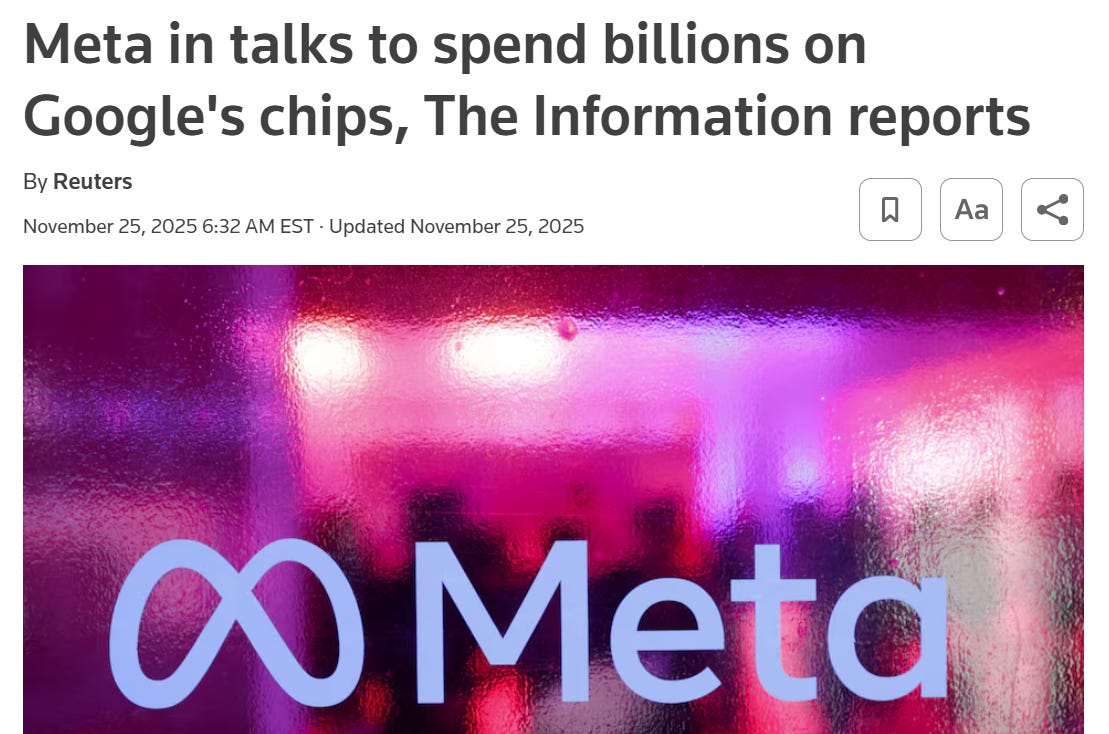
We can safely say this is less of a threat now.
This should mean estimates rise, and rising estimates should mean the stock rises. But it doesn’t which means Nvidia has gotten significantly cheaper.
Technical Good News
No one out-engineers Jensen.
Google Ghosted the MLPerf
Google got caught baldmaxxing.
They were last seen hairless, running away from one of the only independent AI benchmarks.
This was a deliberate choice. Either their chip was delayed or they didn’t want to get flopmogged by the Leather Jacket Man. It shows that TPU is, after all, an ASIC and doesn’t want to compete on general workloads.

SemiAnalysis InferenceX: NVL72 Absolute Framemogging
We love SemiAnalysis and Dylan Patel. InferenceX is great because it’s the biggest continuously updated, open source benchmark for frontier GPUs running in the wild and not in a lab.
There has been a running joke about Jensen Math.
But the thing is Jensen math isn’t funny because he routinely overpromises and underdelivers. Instead, Jensen overpromises and over-overdelivers.
Jensen promised 30x performance on the Blackwell GB200 NVL72 over Hopper on inference workloads, and he delivered… up to 100x.
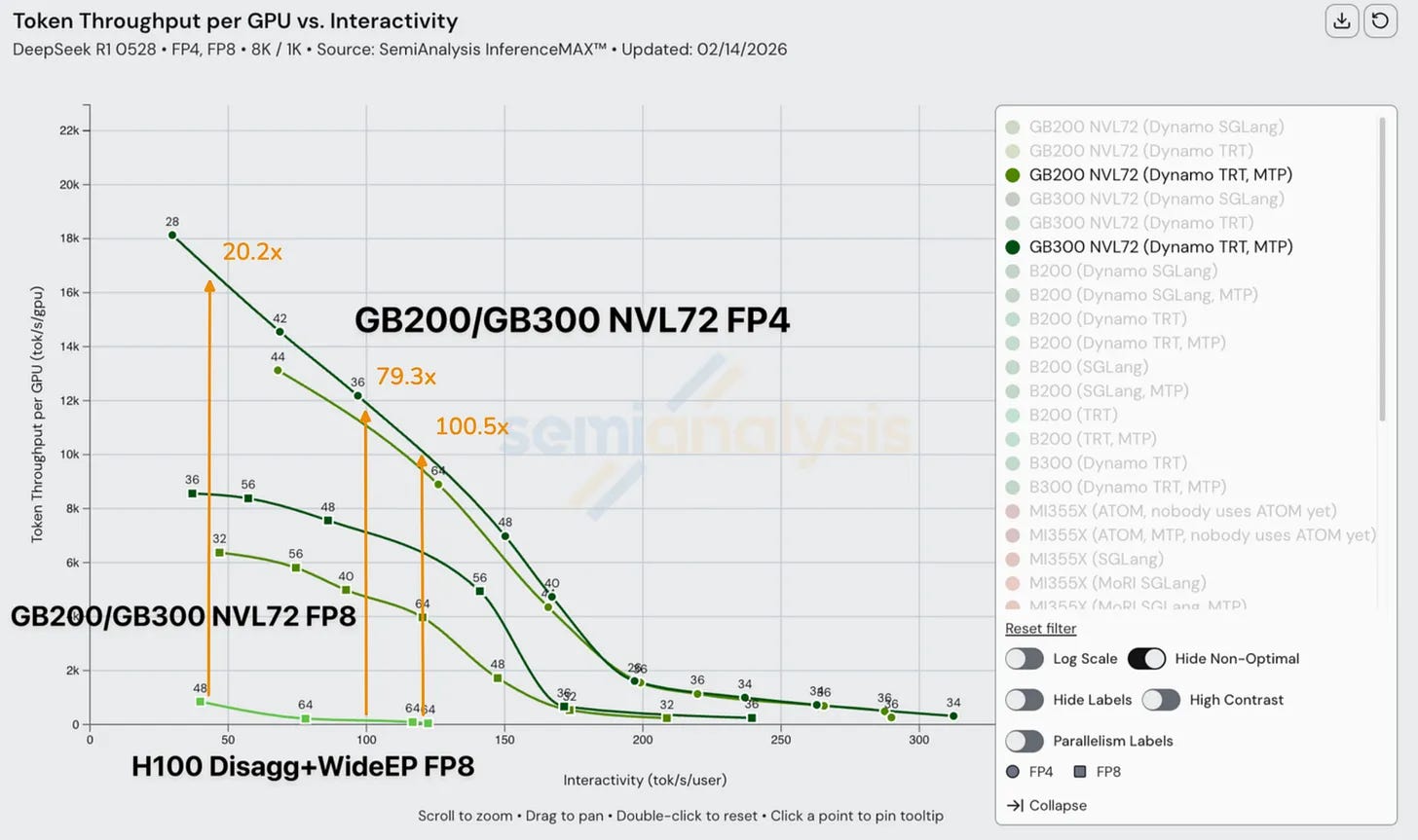
Source: SemiAnalysis
The Networking Holy Grail: Die-to-Die Clock Forwarding Over Optics Enables Datacenter-Sized GPUs
Thank you to Irrational Analysis for catching this during the ISSCC conference. This is truly revolutionary.

Let me break this down for the non-technical.
Traditional scale-up uses 200G PAM4 over copper. This means that each signal carries 2 bits of data, resulting in 4 voltage levels (00,01,10,11). It is hard to distinguish these levels from each other, so a power-hungry DSP chip is needed. This is a fast and narrow approach. Imagine a one-lane 200mph highway where the primary vehicle is a double-decker bus.
To connect chips over longer distances, Nvidia switches to 32G NRZ over optical. This is the slow and wide approach. Imagine a 5-lane 32mph highway where the primary vehicle is a standard sedan.

This usually fails because of jitter, which means that chips across longer distances can’t sync up due to a fuzzy clock signal. Think about a conductor trying to sync up a band when half of them are on the other side of the football field.
Nvidia implements die-to-die clock forwarding and solves this problem by building a better receiver, not transmitter. They get an ultra-low bit error rate of 10e-12, or one in a trillion. And usually, we should be suspicious of really good test results because lab results don’t always transfer to the real world. The temperature could be way different and you may need to fire all lanes at once, resulting in “crosstalk” where the lanes interfere with each other.
But not for Nvidia. Those are the results even while running at high temperatures and with all lanes, meaning crosstalk is already considered, so it’s exactly like the real world.
The conclusion is insanely significant: It expands the scale-up domain arbitrarily, potentially allowing a whole datacenter to act as one cohesive chip. I’ve talked about this in my scale-up CPO article, and it seems like Nvidia will get there first, leaving the ASICcels and AMDcels in the dust.

Can your TPU do that?
Earnings Estimates
Current quarter guidance: $65b revenue, 75% gross margin.
Current quarter consensus: $65.8b revenue, 75% gross margin, $1.53 EPS, $60b datacenter revenue.
Next quarter consensus: $71-75b revenue. Buyside bogey probably $75b or slightly higher.
I am betting that the narrative soon swings to “Nvidia is Back”